

Choosing between a wheelchair-accessible van and an accessible SUV depends on how the vehicle will be used, who will drive, the wheelchair or mobility device being transported, passenger requirements, and the amount of interior space needed. Vans generally provide more purpose-built wheelchair access and interior flexibility, while accessible SUVs can offer a familiar SUV driving position and a different balance of passenger and cargo space. The right choice depends on the individual's mobility needs rather than the vehicle body style alone.

Wheelchair Vans Provide Purpose-Built Interior Access
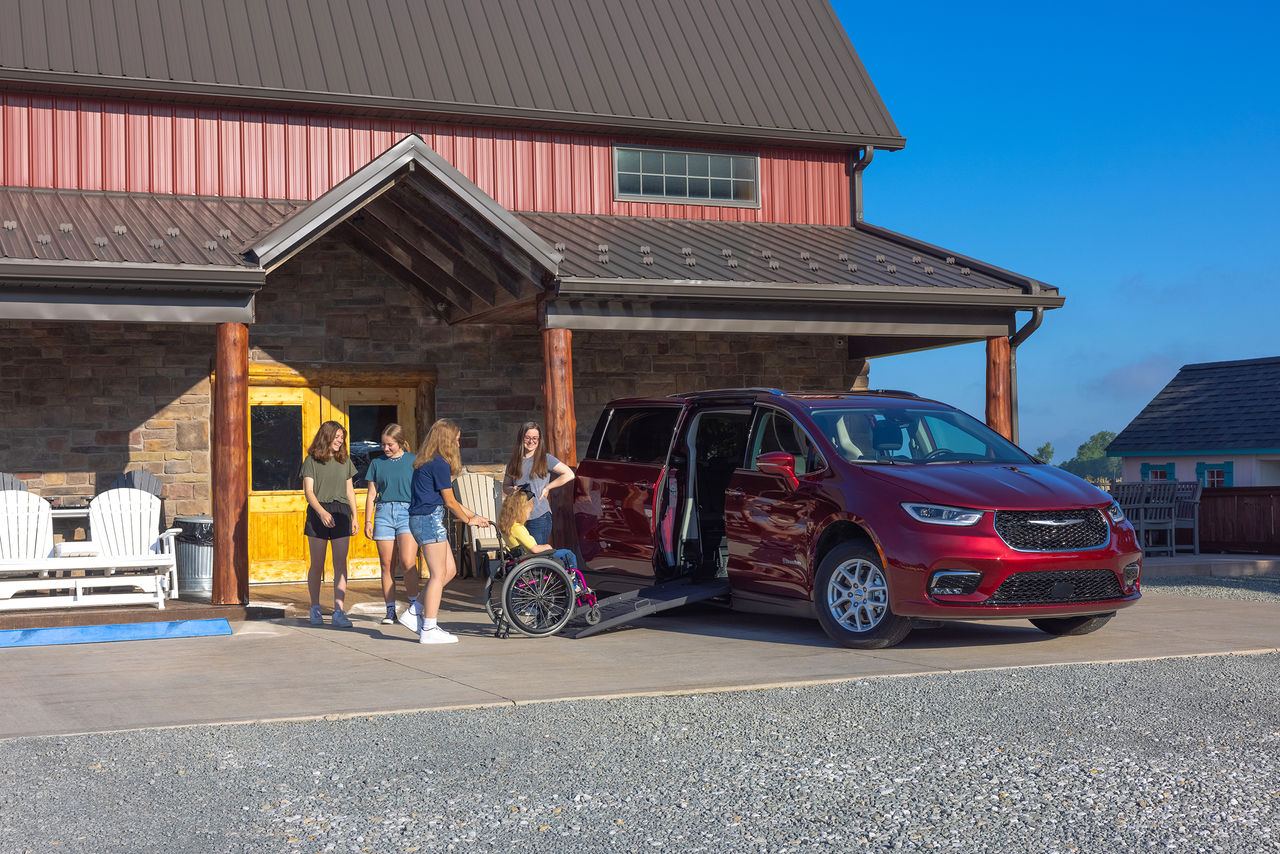
Wheelchair-accessible vans are commonly based on minivans because their floor structure, sliding doors, cabin height, and interior dimensions can accommodate mobility conversions. Depending on the conversion, a van can provide a lowered floor, ramp, wheelchair securement system, removable seating, and power accessibility equipment.
Wheelchair Van Advantages
- Lowered-floor configurations can provide additional interior height.
- Side-entry ramps can provide curbside access.
- Rear-entry ramps can simplify loading in some parking situations.
- Removable seating can create additional wheelchair positions.
- Side-entry configurations can support front-passenger or wheelchair-driver arrangements when properly equipped.
- Larger interior areas can accommodate wheelchairs, scooters, passengers, and caregivers.
- Power ramps and doors can reduce the physical effort required for entry.
A wheelchair van is often the more flexible choice when the wheelchair user remains seated in the wheelchair during travel.

SUVs Provide a Different Mobility Vehicle Option
Accessible SUVs can be appropriate for people whose mobility needs can be met with a transfer seat, lift, hoist, or other adaptive equipment rather than a lowered-floor wheelchair ramp. Suitability depends heavily on the specific SUV, conversion, wheelchair, and seating arrangement.
Accessible SUV Advantages
- SUV body styles can provide a familiar driving experience.
- Higher seating positions may appeal to some drivers and passengers.
- An SUV can work well when the wheelchair is folded or transported separately.
- Transfer equipment can help some users move from a wheelchair into a vehicle seat.
- Certain SUVs can accommodate lifts or other adaptive equipment.
- SUV configurations may suit families that prioritize conventional passenger seating.
An SUV should not automatically be considered more accessible simply because it has a higher ride height. Wheelchair users who need to enter the vehicle while remaining in their chair should evaluate doorway dimensions, floor height, ramp or lift compatibility, and interior headroom.
Vans and SUVs Serve Different Mobility Needs
The biggest difference is usually the way the wheelchair user enters and travels inside the vehicle.
| Mobility consideration | Wheelchair van | Accessible SUV |
|---|---|---|
| Wheelchair stays occupied | Often well suited | Depends on conversion |
| Lowered floor | Common | Conversion dependent |
| Ramp access | Common | Less universal |
| Lift access | Available in some configurations | Available for certain needs |
| Front wheelchair position | Available with some side-entry conversions | Depends on adaptive equipment |
| Multiple wheelchair passengers | Some configurations support this | More configuration dependent |
| Caregiver transportation | Strong option | Depends on layout |
| Folded wheelchair transportation | Yes | Often practical |
| Interior maneuvering space | Generally greater | Varies by model |
| Family passenger capacity | Generally strong | Depends on model |
These are general differences. Individual mobility conversions can vary substantially.

Side-Entry Vans Maximize Wheelchair Positioning Options
Side-entry wheelchair vans use the sliding-door opening for wheelchair access. Depending on the conversion, the wheelchair user can occupy a center-cabin position, front-passenger position, or driver position with appropriate adaptive equipment.
Side-Entry Advantages
- Curbside wheelchair access
- Flexible wheelchair positioning
- Potential wheelchair-driver configuration
- Potential front-passenger positioning
- Removable or fold-away seating
- Power or manual ramp options
The tradeoff is that side-entry ramps require sufficient space beside the vehicle when deployed.

Rear-Entry Vans Simplify Certain Parking Situations
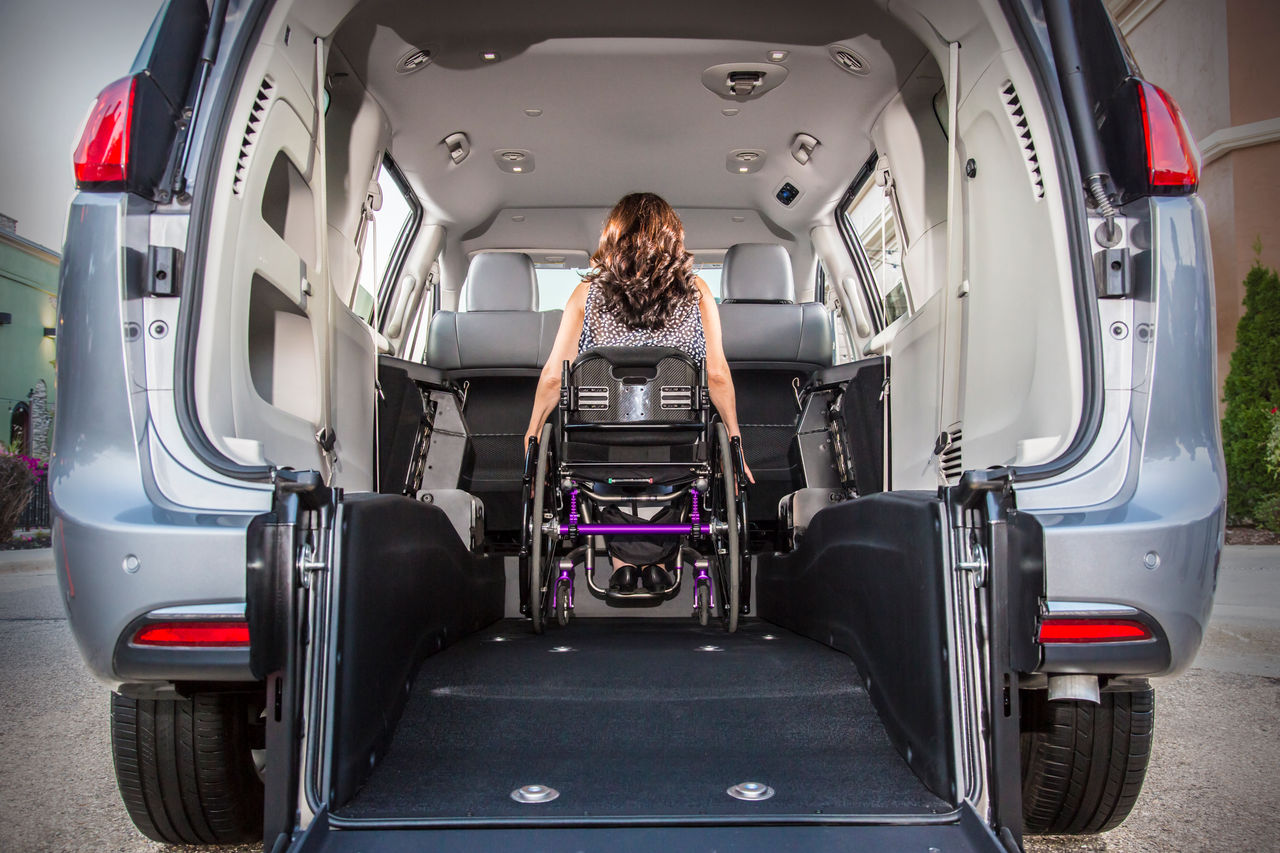
Rear-entry wheelchair vans deploy the ramp from the rear of the vehicle. This arrangement can be useful when side clearance is limited and can provide a straightforward path into the cabin.
Rear-Entry Advantages
- Rear ramp deployment
- Less dependence on side clearance
- Straightforward wheelchair loading
- Generous wheelchair maneuvering area in many conversions
- Practical arrangement for caregivers
- Useful for families primarily transporting a wheelchair passenger
The tradeoff is that rear-entry configurations generally provide fewer options for a wheelchair user who needs to occupy the front row or drive directly from the wheelchair.
Wheelchair Dimensions Determine Vehicle Compatibility
The wheelchair itself should be measured before choosing a vehicle. A mobility specialist needs more than the wheelchair's width to determine whether a particular vehicle will work.
Measure These Wheelchair Specifications
| Overall width | Overall height |
| Overall length | Weight |
| Turning radius | Seat height |
| Footrest dimensions | Battery or power system |
| Scooter dimensions, if applicable |
The vehicle should then be evaluated for doorway clearance, ramp or lift capacity, interior headroom, floor space, and securement compatibility.
Driver or Passenger Needs Change the Best Choice
The first major question is whether the wheelchair user will drive or ride as a passenger. A wheelchair user who wants to drive may benefit from a side-entry configuration with appropriate adaptive driving controls or a wheelchair docking system. A passenger who always travels with a caregiver may have different priorities.

Driver-Focused Mobility Needs
- Side-entry access may provide greater positioning flexibility.
- Adaptive steering or hand controls may be available.
- Transfer seats can support certain users.
- Wheelchair docking systems can allow some users to drive directly from their wheelchair.
Passenger-Focused Mobility Needs
- Rear-entry can provide a straightforward loading arrangement.
- Side-entry can provide curbside access.
- Caregiver access becomes an important consideration.
- Seating for additional family members may influence the conversion.
Families Should Consider More Than the Purchase Price
The purchase price is only one part of mobility-vehicle ownership. Families should consider conversion equipment, maintenance, accessibility-equipment service, insurance, financing, replacement parts, and expected ownership length.
A used accessible vehicle can also be an option, but buyers should inspect both the underlying vehicle and the mobility conversion. The ramp, lift, lowered floor, securement system, electrical components, and seating should be evaluated alongside the engine, transmission, brakes, tires, and other automotive systems.
Basil Mobility Helps Depew Drivers Compare Mobility Vehicles
Basil Mobility in Depew provides accessible vehicles and mobility support for drivers and families throughout Buffalo and Western New York. Its mobility inventory includes wheelchair-accessible vans based on platforms such as the Honda Odyssey, Toyota Sienna, Chrysler Pacifica, and other mobility vehicles, with configurations that can include ramps, lowered floors, securement systems, and flexible seating.
Basil Mobility also provides service for wheelchair-accessible vehicles and mobility equipment, including maintenance and repairs for both the underlying vehicle and accessibility systems.
This allows buyers to evaluate not only which vehicle fits their mobility needs, but also how the accessibility equipment can be supported throughout ownership.
Frequently Asked Questions About Mobility Vans and SUVs
Is a wheelchair van better than an SUV?
Are wheelchair vans safer than SUVs?
Can a wheelchair user drive an SUV?
Can a wheelchair van accommodate a power wheelchair?
Is side-entry or rear-entry better?
Do wheelchair vans have to have lowered floors?
Should I buy a new or used mobility vehicle?
How do I know whether a wheelchair will fit?
Where can I compare wheelchair-accessible vehicles near Buffalo?
Experience the Basil Difference
Basil Mobility helps drivers throughout Depew, Buffalo, Cheektowaga, Amherst, Lancaster, West Seneca, Williamsville, Clarence, and nearby Western New York communities explore wheelchair accessible vehicles designed to improve comfort, safety, and everyday independence.